

Poverty And Famines In India Under The British Rule
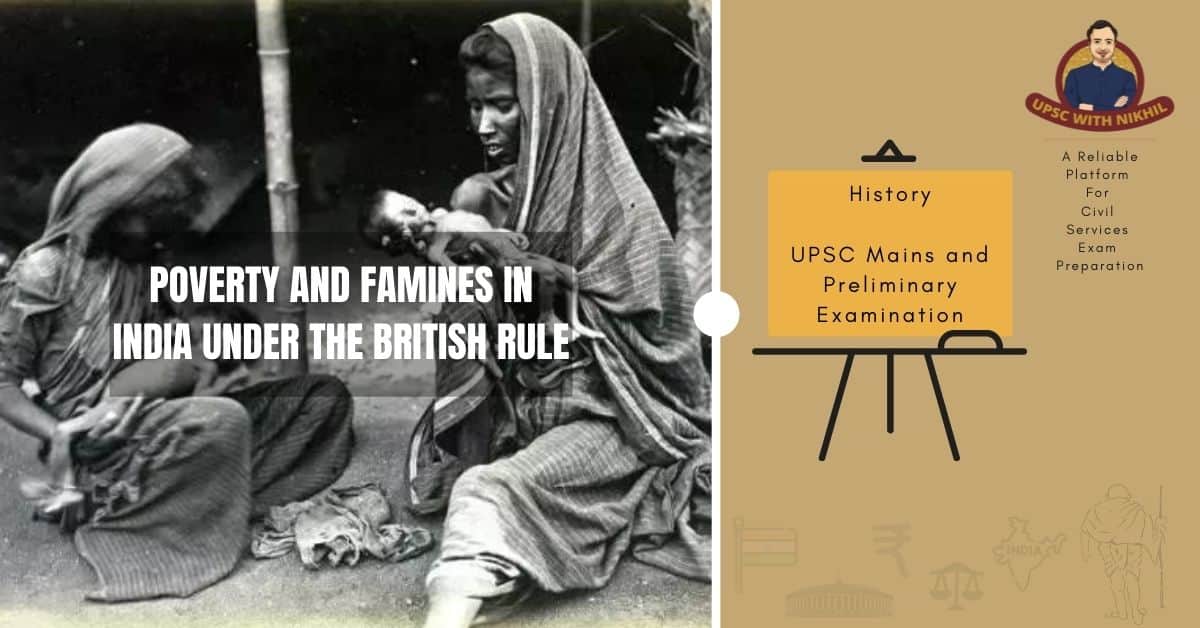
The prevalence of extreme poverty among India's people was a major feature of British rule and the net result of British economic policies. While historians disagree on whether or not India became poorer under British rule, there is no denying that most Indians were always on the verge of starvation during that time. They found it increasingly difficult to find work and make a living as time went on. Economic exploitation by the British, the decline of indigenous industries, the failure of modern industries to replace them, high taxes, the drain of wealth to Britain, and a backward agrarian structure leading to agriculture stagnation and exploitation of the poor peasants by zamindars, landlords, princes, moneylenders, merchants, and the state gradually reduced the Indian people to extroversion.

- India's colonial economy remained stagnant at a low level.
- The people's poverty reached a pinnacle in a series of famines that ravaged India in the second half of the nineteenth century.
- The first of these famines struck western Uttar Pradesh in 1860-61, killing more than 2 lakh people. A famine engulfed Orissa, Bengal, Bihar, and Madras in 1865-66, killing nearly 20 lakh people, with Orissa alone losing ten lakh.
- During the famine of 1868-1870 in western Uttar Pradesh, Bombay, and Punjab, over 14 lakh people died. In Rajputana, another affected area, many states lost one-quarter to one-third of their population.
- In Madras, Mysore, Hyderabad, Maharashtra, western Uttar Pradesh, and Punjab, perhaps the worst famine in Indian history occurred in 1876–78. Madras lost nearly 35 lakh people, while Maharashtra lost 8 lakh. Mysore lost nearly 20% of its population, while Uttar Pradesh lost over 12 lakh people.
- Drought caused a nationwide famine in 1896-97, affecting over 9.5 crore people, nearly half of whom died. The famine of 1899-1900 came quickly after, causing widespread devastation. Despite government efforts to save lives by providing famine relief, more than 25 lakh people died.
- Apart from these major famines, there were numerous local famines and scarcities. Between 1854 and 1901, over 28,825,000 people died in famines, according to William Digby, a British writer.
- In 1943, another famine in Bengal displaced nearly three million people. These famines, as well as the large number of people who died as a result of them, demonstrate the extent to which poverty and starvation had taken root in India.
- In the 30 years between 1911 and 1941, the amount of food available to an Indian decreased by as much as 29%. There were numerous other indicators of India's economic illiteracy and poverty.
- Similarly, despite tremendous progress in modern medical sciences and sanitation, the average life expectancy of an Indian in the 1930s was only 32 years.
- The average age in most West European and North American countries was already over 60. Natural niggardliness was not to blame for India's economic backwardness and poverty.
- They were created by humans. India's natural resources were plentiful and capable of providing a high level of prosperity to the people if properly utilised. However, India presented the paradox of a poor people living in a rich country as a result of foreign rule and exploitation, as well as a backward agrarian and industrial economic structure—indeed, as the total outcome of its historical and social development.
- India's poverty was not caused by its geography, a scarcity of natural resources, or an "inherent" flaw in the people's character and abilities. It was also not a relic from the Mughal or pre-British eras.
- It was primarily a product of the last two centuries of history. Prior to that, India was no more backward than Western European countries. Neither were the disparities in living standards among the countries of the world at the time.
- India was subjected to modern colonialism and was prevented from developing precisely during the period when the countries of the West developed and prospered. All of today's developed countries arose almost entirely during Britain's rule of India, with the majority of them occurring after 1850.
- The disparities in living standards between different parts of the world were not significant until 1750. In this context, it's worth noting that the start of the Industrial Revolution in Britain and the British conquest of Bengal almost exactly coincide!
- The basic fact is that the same social, political, and economic processes that resulted in industrial development and social and cultural progress in Britain also resulted in economic underdevelopment and social and cultural backwardness in India, which was then maintained.
- The reason is self-evident. Britain subordinated India's economy to its own and determined India's basic social trends based on her own requirements.
- As a result, India's agriculture and industries stagnated, peasants and workers were exploited by zamindars, landlords, princes, moneylenders, merchants, capitalists, and foreign governments and their officials, and poverty, disease, and semi-starvation spread.

The prevalence of extreme poverty among India's people was a major feature of British rule and the net result of British economic policies. While historians disagree on whether or not India became poorer under British rule, there is no denying that most Indians were always on the verge of starvation during that time. They found it increasingly difficult to find work and make a living as time went on. Economic exploitation by the British, the decline of indigenous industries, the failure of modern industries to replace them, high taxes, the drain of wealth to Britain, and a backward agrarian structure leading to agriculture stagnation and exploitation of the poor peasants by zamindars, landlords, princes, moneylenders, merchants, and the state gradually reduced the Indian people to extroversion.
• India's colonial economy remained stagnant at a low level.
• The people's poverty reached a pinnacle in a series of famines that ravaged India in the second half of the nineteenth century.
• The first of these famines struck western Uttar Pradesh in 1860-61, killing more than 2 lakh people. A famine engulfed Orissa, Bengal, Bihar, and Madras in 1865-66, killing nearly 20 lakh people, with Orissa alone losing ten lakh.
• During the famine of 1868-1870 in western Uttar Pradesh, Bombay, and Punjab, over 14 lakh people died. In Rajputana, another affected area, many states lost one-quarter to one-third of their population.
• In Madras, Mysore, Hyderabad, Maharashtra, western Uttar Pradesh, and Punjab, perhaps the worst famine in Indian history occurred in 1876–78. Madras lost nearly 35 lakh people, while Maharashtra lost 8 lakh. Mysore lost nearly 20% of its population, while Uttar Pradesh lost over 12 lakh people.
• Drought caused a nationwide famine in 1896-97, affecting over 9.5 crore people, nearly half of whom died. The famine of 1899-1900 came quickly after, causing widespread devastation. Despite government efforts to save lives by providing famine relief, more than 25 lakh people died.
• Apart from these major famines, there were numerous local famines and scarcities. Between 1854 and 1901, over 28,825,000 people died in famines, according to William Digby, a British writer.
• In 1943, another famine in Bengal displaced nearly three million people. These famines, as well as the large number of people who died as a result of them, demonstrate the extent to which poverty and starvation had taken root in India.
• In the 30 years between 1911 and 1941, the amount of food available to an Indian decreased by as much as 29%. There were numerous other indicators of India's economic illiteracy and poverty.
• Similarly, despite tremendous progress in modern medical sciences and sanitation, the average life expectancy of an Indian in the 1930s was only 32 years.
• The average age in most West European and North American countries was already over 60. Natural niggardliness was not to blame for India's economic backwardness and poverty.
• They were created by humans. India's natural resources were plentiful and capable of providing a high level of prosperity to the people if properly utilised. However, India presented the paradox of a poor people living in a rich country as a result of foreign rule and exploitation, as well as a backward agrarian and industrial economic structure—indeed, as the total outcome of its historical and social development.

• India's poverty was not caused by its geography, a scarcity of natural resources, or an "inherent" flaw in the people's character and abilities. It was also not a relic from the Mughal or pre-British eras.
• It was primarily a product of the last two centuries of history. Prior to that, India was no more backward than Western European countries. Neither were the disparities in living standards among the countries of the world at the time.
• India was subjected to modern colonialism and was prevented from developing precisely during the period when the countries of the West developed and prospered. All of today's developed countries arose almost entirely during Britain's rule of India, with the majority of them occurring after 1850.
• The disparities in living standards between different parts of the world were not significant until 1750. In this context, it's worth noting that the start of the Industrial Revolution in Britain and the British conquest of Bengal almost exactly coincide!
• The basic fact is that the same social, political, and economic processes that resulted in industrial development and social and cultural progress in Britain also resulted in economic underdevelopment and social and cultural backwardness in India, which was then maintained.
• The reason is self-evident. Britain subordinated India's economy to its own and determined India's basic social trends based on her own requirements.
• As a result, India's agriculture and industries stagnated, peasants and workers were exploited by zamindars, landlords, princes, moneylenders, merchants, capitalists, and foreign governments and their officials, and poverty, disease, and semi-starvation spread.